Uechi Ryu History & Lineage
Uechi Ryu Karate Do – A Brief History*
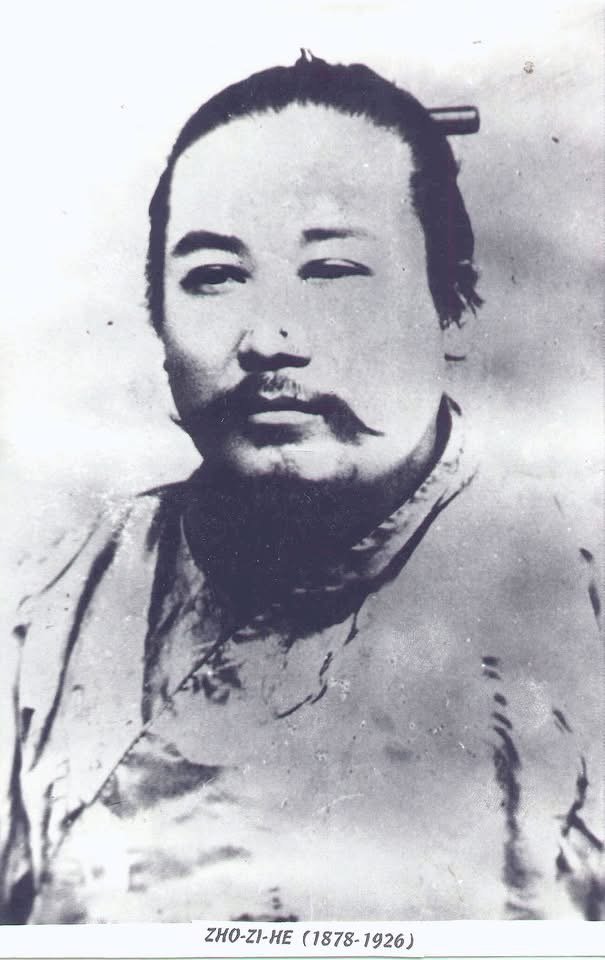
Uechi Ryu Karate Do was originally a form of Chinese Boxing — one of the pangainoon (“half-hard-soft”) systems. According to one researcher, its formal name may have been “Nan-Pa Toro Ken” — South Group Mantis Fist. This system combined the movements of the tiger, dragon, crane, leopard, snake, mantis, and cobra.
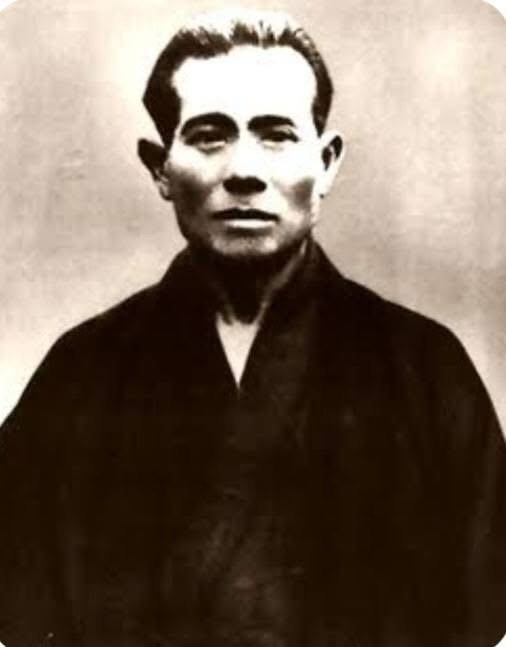
Grandmaster Uechi Kanbun Sensei was responsible for bringing this art out of China. Kanbun Sensei’s decision to teach allowed the system to spread worldwide, thus preserving the original style and allowing fro the creation
of many variations for all to study. Kanbun Sensei never told the true old name of the system he studied in China, but originally simply named it “Pangainoon-Ryu Karate-Jutsu”.
Uechi Kanbun Sensei was an Okinawan Samurai (Bushi) descendent, born on 5 May 1877 in Izumi, a small village on the Motobu peninsula of northern Okinawa. As a young man, Kanbun Sensei left Okinawa for China to avoid conscription in the Japanese Army, to study Chinese Kung Fu, and to further business prospects for his family’s herbal medicine trade. His resolve to study fighting arts in China was inspired by incredible tales of the fighting skills and feats of the Chinese masters as told to him by an old
karate master named Toyama, who had traveled frequently to China to study such arts. Kanbun Sensei was already proficient with the Bo (staff) and had excelled in the karate training of his village, but these stories fired his
imagination and made him thirsty for new and deeper training. And so, in March 1897, nineteen year old Uechi Kanbun Sensei left Okinawa for China to seek fulfillment of his dream of becoming a true warrior.
In Fuchow, a major city of the Fukien Province of China, just west of the northern tip of Taiwan, Kanbun Sensei met a young Taoist priest named Shuu Shiwa Sensei, a master of Chinese Boxing. Among other styles, Shuu Sensei taught his family system of Kung Fu which, according to research, may have been created by an ancestor approximately 200 years prior, the monk Shuu
Anan. Kanbun Sensei studied every day for ten years, and became a master of the Shuu Family Style. His training with Shuu Sensei extended beyond fighting skills — Kanbun Sensei also deepened his already considerable
knowledge of the healing arts, and made medicines that he sold to help pay his tuition. Eventually he was permitted to teach, and opened his first school in Nansoue, about 250 miles southwest of Fuchow. He taught there for nearly three years. Near the end of that time, an unfortunate incident occurred in which a technique from the Shuu Family Style was accidentally
misapplied and a man was killed. Kanbun Sensei closed his school and left China, vowing to never teach Kung Fu again. The year was 1910. It is probable that Uechi Kanbun Sensei was the only Okinawan who ever taught Shuu Family Style Kung Fu in China.
After his return to Okinawa, Kanbun Sensei married and settled down to a life of farming. His son Kanei was born on 26 June 1911. Other children followed, and the Uechi family grew. Kanbun Sensei still refused to discuss
his skills in Kung Fu or his life in China.
After seventeen years of silence, Uechi Kanbun Sensei was finally convinced to share his art once again. He had left Okinawa in 1924 for employment in Mainland Japan, in the Wakayama Prefecture near Osaka. His first non-family student was an Okinawan named Tomoyose Ryuyu, who lived in the Okinawan compound in Wakayama close to where Kanbun Sensei lived. The year was 1927 — within a few years, Kanbun Sensei and his senior students established a highly reputable dojo. Kanbun Sensei taught full time, and also made and sold the medicinal compounds he had learned from his father
using herbs he brought from China. By that time, the art of fighting without weapons was becoming known as karate — “Empty Hand” — which had previously been known as “Chinese Hand” (one Japanese Kanji KARA means “Chinese”, the other KARA means “Empty”).
When Kanei Sensei was sixteen years old and in ill health (1927), he joined his father in Wakayama and began to learn the art of “Pangainoon-Ryu Karate-Jutsu” — Half-Hard-Soft Style Empty Hand Technique. He regained his
health and became proficient enough to establish his own Osaka dojo in April 1937, moving it to Hyogyo a short time later.
In 1940, Kanbun Sensei renamed the system “UechiRyu Karate-Jutsu”. In 1942, Kanei Sensei returned to Okinawa and began teaching in his home dojo in Nago. Kanbun Sensei returned to Okinawa in late 1946, and moved to Ie Jima, an island just off the northwest coast of Okinawa. He died there on 25 November 1948, losing his agonizing battle against nephritis. Uechi Kanbun Sensei was 71 years old. After his death, the art was renamed UechiRyu
KarateDo (Uechi’s Method of the Way of Karate).
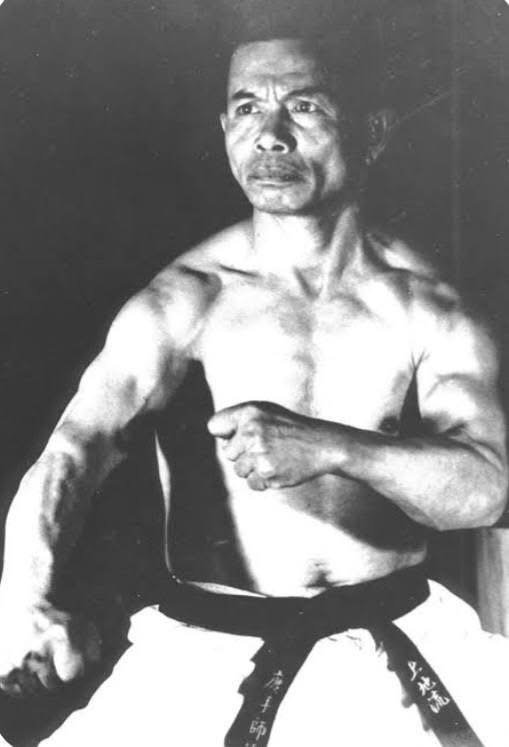
Uechi Kanei Sensei continued to teach a modified version of his father’s art for the remainder of his life. In the early 1950’s, he moved the dojo to Ginowan, and later to Futenma (1956). Kanei Sensei was considered one of
the world leaders in the field of karate development, instruction, and popularization. He passed away in early 1991 after a long term of illness. Uechi Kanei Sensei was 79 years old, and had achieved 10th Dan.
There are now several UechiRyu-style associations on Okinawa, all teaching slightly different but equally valid styles of the same system.
G. Breyette — (c) 2003, All Rights Reserved
Michigan History of Hanshi William “Bill” Keith
Hanshi William “Bill” Keith, A 61 Years journey!
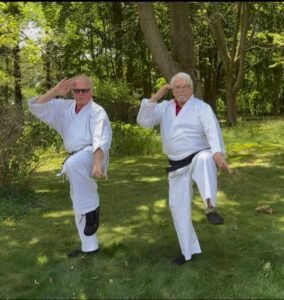
Sixty-one years after first stepping into Al Horton’s basement with his friends Bob and Butch Keith, Hanshi William “Bill” Keith continues to practice, preserve, and share the martial art he began studying as a young man.
Keith would go on to earn his Sandan, Yondan, and Godan ranks under Grandmaster kanei Uechi, who became his sensei after Al Horton separated from the Uechi-ryu Association. Following Master Uechi’s passing, Shigeru Takamiygi became Keith’s sensei and continued guiding his development in Uechi-ryu.
Al Horton would issue Keith his Kyudan (ninth-degree) and several Grandmasters and three different organizations would promote him to Judan (tenth-degree) in 2026.
Keith has founded and built successful dojos in Michigan and Florida and taught around the world.
Michigan History of Hanshi Jon Michael Olsen
Uechi Olsen Biography
Hanshi Jon Olsen
Martial Artist, Master Instructor, and Founding Member of the Uechi-PangaiNoon Alliance
Hanshi Jon Olsen began his study of Uechi-ryu Karate-do in 1991 under the instruction of Hanshi Don Joyner. He later tested for his Shodan (1st Degree Black Belt) and Nidan (2nd Degree Black Belt) under Grandmaster James Thompson. Throughout his martial arts journey, Olsen continued training with both Joyner and Thompson, and upon returning to Michigan, furthered his studies under Judan William “Bill” Keith.
Hanshi Olsen’s martial arts background extends beyond Uechi-ryu. He studied Judo during his college years and Aikido under Grandmaster James Thompson. He also trained in Jeet Kune Do under Sifu Mark Stewart, earning a Level 3 Instructor Certification in Jeet Kune Do and Level 1 certification in SKD Tactical Weapons…Kali-Escrima-Arnis.
As an instructor, Olsen taught at Joyner’s Professional Karate, which was later purchased by Hanshi Bill Keith. Following Keith’s retirement in 2004, Olsen purchased East West Karate and successfully operated the school for the next ten years.
Hanshi Olsen is a dynamic and innovative instructor who believes that martial arts must be more than theoretical knowledge. His approach emphasizes transforming traditional principles, concepts, and techniques into practical, usable self-defense applications. For Olsen, karate is not simply an art preserved from the past; it is a living, evolving discipline that must remain relevant to the challenges and realities of today’s world.
His philosophy recognizes that while the foundational principles of Uechi-ryu remain valuable, their applications can continually be explored, refined, and adapted to meet the needs of modern practitioners. He encourages students to think critically, understand the purpose behind their techniques, and discover how traditional movements can be effectively employed in real-world situations.
Beyond his technical expertise, Hanshi Olsen is recognized for his humility, open-mindedness, and commitment to unity within the martial arts community. He firmly believes that no martial artist is inherently superior to another because of age, rank, title, or organizational affiliation. Rather than becoming entangled in martial arts politics, Olsen promotes mutual respect, cooperation, and the free exchange of knowledge among practitioners.
Recognizing the need for greater fellowship and cooperation among practitioners of Uechi-ryu, PangaiNoon, and related systems, Hanshi Olsen became a key figure in the development and establishment of the Uechi-PangaiNoon Alliance (UPA). His involvement helped advance the Alliance’s vision of creating an inclusive community where martial artists can learn from one another, preserve their shared heritage, and grow without the barriers of politics, egos, or organizational divisions.
Hanshi Olsen exemplifies the belief that true mastery is demonstrated not merely through technical ability or rank, but through humility, character, service, and the willingness to help others succeed.
His approach to martial arts reflects a simple yet powerful philosophy: Honor the past, embrace the present, and prepare the martial arts for the future.
Hanshi Olsen also acknowledges with gratitude the pioneering contributions of the late Grandmaster Allen J. Horton, whose efforts helped establish Uechi-ryu Karate-do in Michigan.